
Here Today, Not Gone Tomorrow — Colonial Remnants are Choking Out the Columbia Wetlands
Living Lakes Canada begins project to thin out unwanted and outdated dams and reinforced riverbanks
We all have that pesky piece of too-tight clothing in our closet that makes it hard to move, or even breathe. The Columbia River’s version is all the reinforced riverbanks and small dams that were added during the 1800s.
These features have essentially acted like a too-tight corset, preventing the river from “breathing” properly — the periodic deep “exhale” of floodwaters that for millennia flowed out from the river to rejuvenate the surrounding wetlands. The impact on these wetlands, internationally recognized for their biological diversity and critical role in supporting migratory birds, has been detrimental. Marsh-loving creatures like the western painted turtle, American bittern, and trumpeter swan are losing precious spots to call home.
It’s time to do something about that.
What is the history behind all the colonial structures left in the Columbia River?
Back in the 1800s, settlers in B.C.’s Columbia Valley wanted to modify the river so it could be used to transport goods and people using steamboats before the railway or roads were built. This meant controlling and channelizing the flow of water. A more orderly river means a reliable form of transportation.

Riverbanks were reinforced, docks were built, and wing dams — small dams that function to redirect the flow of water away from side channels — were installed. With these structures, the Columbia River was transformed from a dynamic, meandering water body to a deep and predictable channel. While many of these structures are no longer serving their original purpose, they are still present within the river.
What was the result of adding docks, wing dams and riverbank reinforcements to the Columbia River?
Historically, the Columbia River was in a constant state of change, moving back and forth across the valley and leaving a diverse mosaic of habitats in its wake. In limiting the river’s ability to move and change, we restricted the dynamic processes that created and maintained the diversity of wetlands across the floodplain over centuries. The range of wetland types supports more species of birds and fishes than it would if it were all the same type of habitat.
We’re seeing that the natural levees, the elevated banks on the sides of the river, are rising due to changes in the way that sediment moves through the water. As the levees rise, it is more difficult for the river levels to rise above the levees and recharge the nearby wetlands.
Vegetation on top of the levees is becoming increasingly dense, which traps additional sediment. Larger shrubs and trees now grow along the levees, creating a positive feedback cycle as high banks are reinforced with deep, hardy root systems. Over time, this process is creating firmer, more permanent levees which the river cannot break through to create new side channels or wetlands.
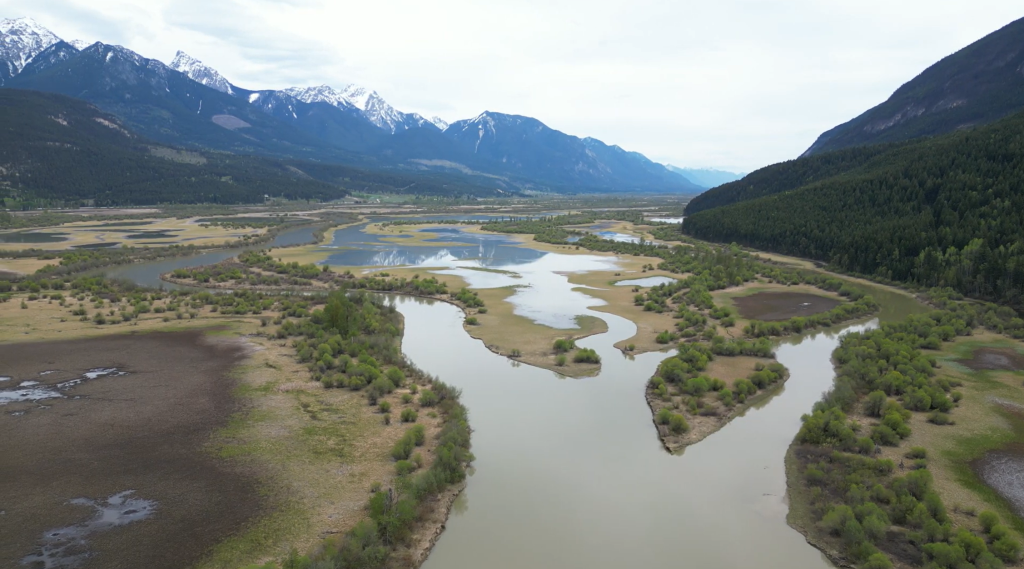
What happens when a river isn’t free to regularly overflow into traditional floodplains?
Without this regular recharge to the floodplains and wetlands, these habitats fundamentally change. Species that prefer these wet landscapes are either forced to relocate or begin to die out.
How does Living Lakes Canada intend to help the Columbia Wetlands?
Not only are these structures detrimental, but many of them are not even serving a purpose anymore. And it’s not just a handful — there are hundreds of these old, tattered structures throwing the Columbia River out of balance and drying out the wetlands. An intervention is needed to revitalize these critical ecosystems.
Living Lakes Canada is working with the Columbia Wetlands Stewardship Partners (CWSP), a collective of over 30 groups, communities and agencies, to get these leftover remnants of times past out of the river, for good.
For the last two years, Living Lakes has been inventorying the main channel of the Columbia River. We found over 200 structures that impact river-floodplain processes. While some of these are serving a purpose today, or create useful habitat features, others serve no benefit and can be safely removed from the system. We are currently working with CWSP, First Nations, technical advisers and regulators to identify structures that would be suitable for remediation.
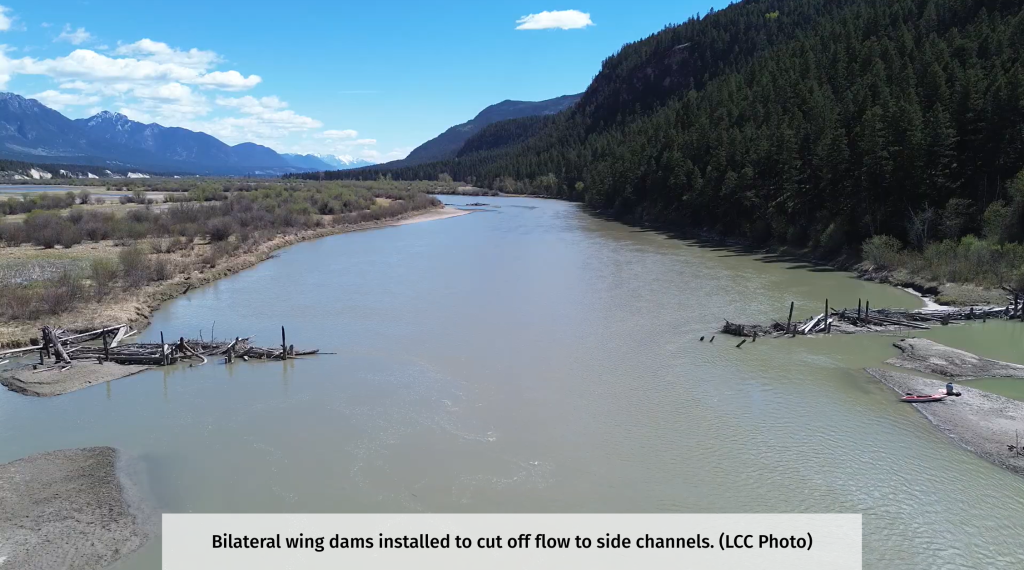
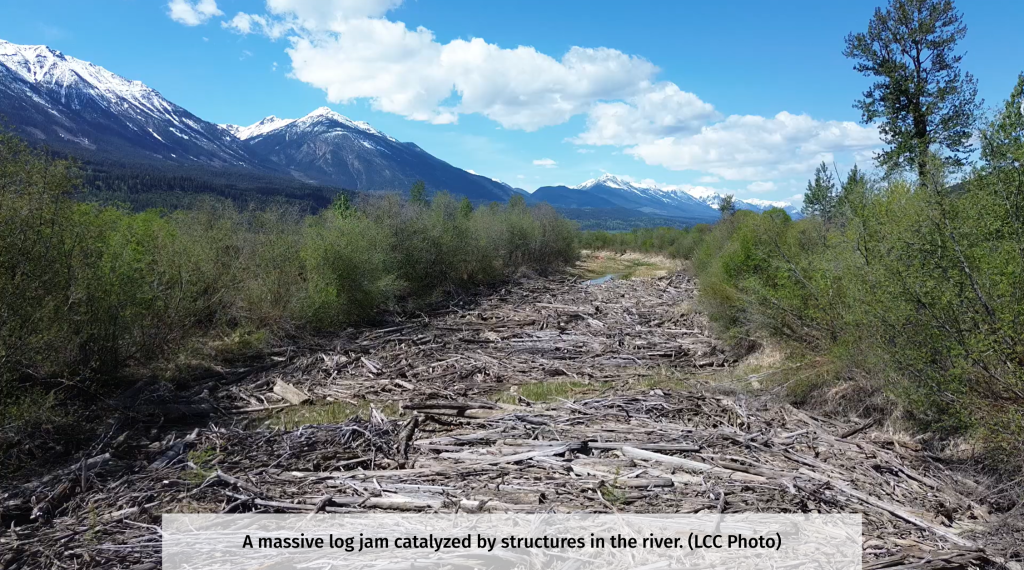
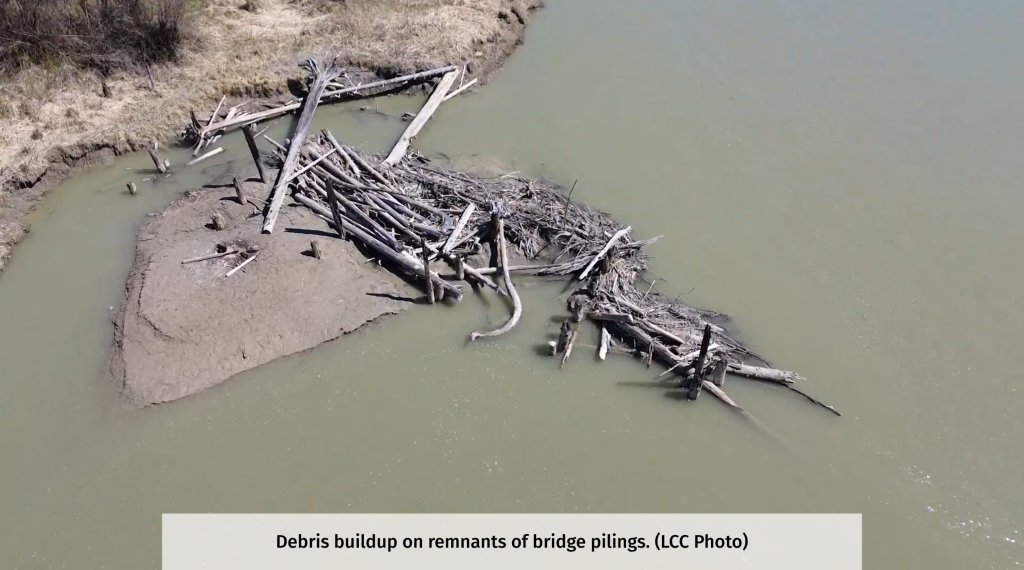
Images of historic infrastructure causing obstructions along the upper Columbia River.
The value of using process-based restoration to do the work
The overall objective of this multi-year project is to re-establish the natural processes within the upper Columbia River to support the connection between the floodplains and the river. This holistic approach to restoration, also called process-based restoration, addresses the root of the problem within an ecosystem, rather than just the symptoms of it. Process-based restoration is gaining popularity, with restoration researchers calling for prioritization of this type of work. By harnessing the energy of the natural processes, this method is also efficient and cost-effective.
A variety of other restoration projects are currently being proposed and implemented within the Columbia Wetlands, such as the construction of beaver dam analogues to retain water on the landscape. Our approach is different in that it intends to re-establish the physical processes that generate wetlands habitats naturally.
The Columbia River wetlands are one of the largest wetlands in B.C., providing habitat to upwards of 65 species at risk and concern, but this area is in need of our help. Climate change is further intensifying the strain on these sensitive habitats, with some areas having already lost over 16 per cent of their permanent open water area in the last decade. That’s like having six thirsty friends but only enough water bottles for five of them. Action to restore natural river processes are critical for maintaining climate resilience, carbon storage, and habitat complexity.
This project is a huge undertaking. We’re looking at multiple years, dozens of historical structures, and thousands of impacted hectares. But this work is overdue, and Living Lakes is grateful to have the opportunity to help restore the intrinsic relationship between the Columbia River and its floodplains.
Living Lakes Canada would like to thank all the generous funders that have supported this work: Habitat Conservation Trust Foundation, Wildlife Habitat Canada, the Audain Foundation, the Sitka Foundation and the BC Conservation & Biodiversity Awards Foundation.
The Habitat Conservation Trust Foundation is a non-profit, charitable foundation that improves the conservation outcomes of BC’s fish and wildlife, and the habitats in which they live. The foundation funds conservation projects and educates and engages the public about BC’s natural assets.
Wildlife Habitat Canada is a non-profit, conservation organization that conserves habitat, primarily by investing the funds from the sale of the Canadian Wildlife Habitat Conservation Stamp and Print program, contributed by waterfowl hunters. Since 1985, the organization has provided over $64 million in grants to more than 1,600 habitat conservation projects across Canada.
The Sitka Foundation catalyzes the conservation of nature and the promotion of biodiversity in British Columbia, as well as nationally and globally. The foundation has distributed grants to hundreds of charitable organizations since its founding in 2008.
Founded by Michael Audain, the Audain Foundation was established in 1997 and is committed to protecting and conserving wildlife in British Columbia’s land and surrounding waters, with the objective of safeguarding a future with healthy ecosystems. The Foundation was also instrumental in founding the Grizzly Bear Foundation which operates independently under the Canada Not-for-Profit Corporations Act.
The BC Conservation & Biodiversity Awards Foundation was established in 2020 to recognize and financially support conservation based initiatives in the Province of British Columbia. The awards are given annually for the most impactful initiatives brought forward by BC based charities, for specific work contributing to the improvement of the natural environment of BC and the preservation of its wilderness and biodiversity.