
Trading in Teeth for Tools – Building Beaver Dam Analogues for Environmental Restoration
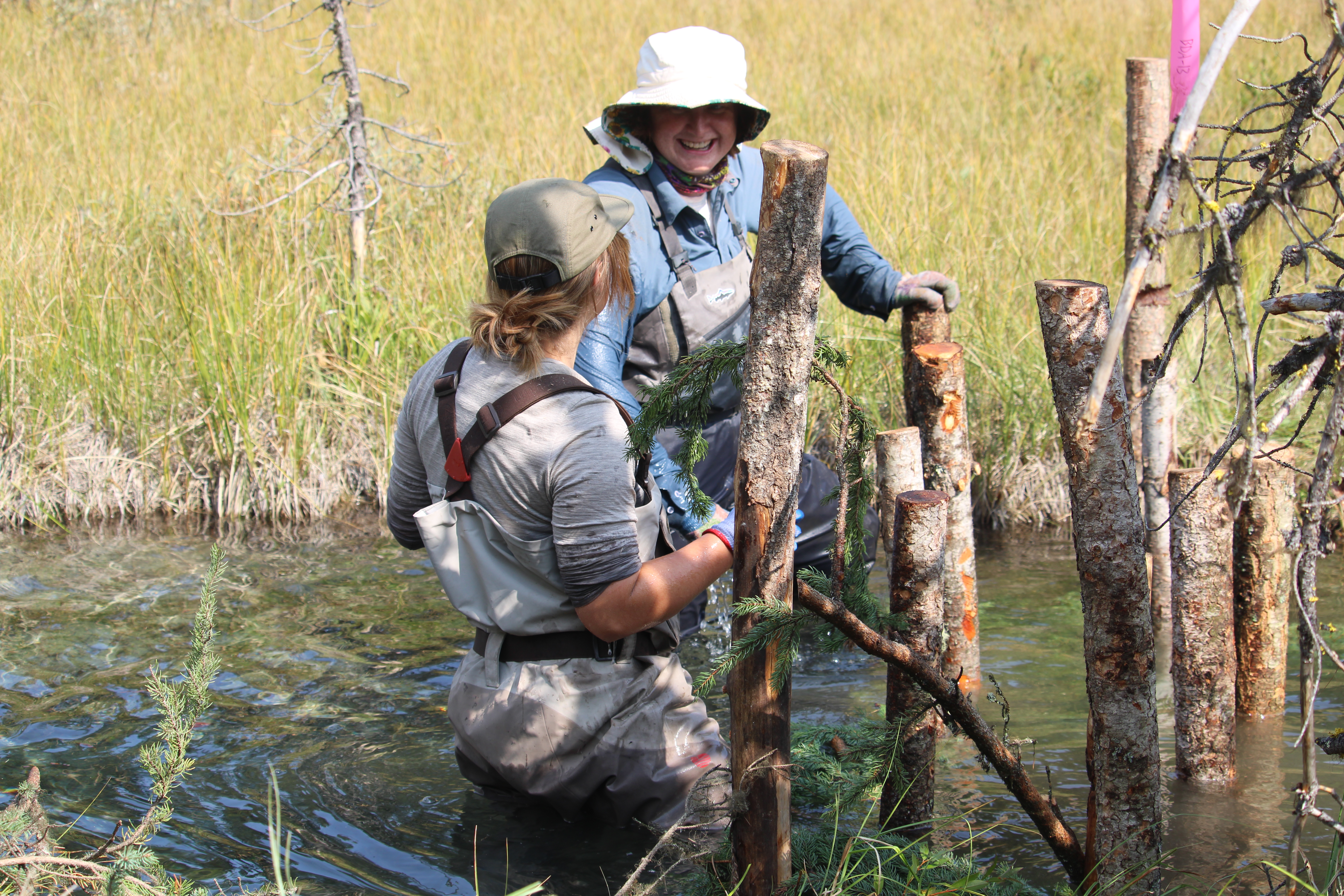
The work takes place in the middle of a serene wetland on an early summer morning: you break down fir and alder branches, weave them into the intricate lattice structure of a dam, and pack any gaps with mud and sediment.
It sounds like a nature documentary scene featuring a beaver family. But it’s actually an apt description of a summer morning out in the field for Kai Smith, a Living Lakes Canada restoration and monitoring technician. Smith joined the Columbia Wetlands Stewardship Partners (CWSP) on their multi-year restoration of the upland benchland wetlands in the Columbia River Valley of eastern B.C.
They worked closely alongside CWSP to take a lesson from an engineering expert, the beaver, as they rolled out a series of new beaver dam analogues (BDAs).
How beaver dams — and their analogues — benefit the environment
These BDAs mimic the structure and function of beaver dams, slowing down the flow of water in creeks and raising the water level so it overtops the creek banks and reconnects to the floodplain. Crews construct these vital structures in historic beaver haunts where the hardworking rodents have vanished. Climate change and human activity have had compounding negative effects on the beaver’s access to food sources and habitat, and the landscape is feeling the loss of this integral species.
Beavers are well-documented masters of their environments, building dams that create or increase the size of wetlands, supporting wetland recharge and reducing erosion. By increasing the ability of areas to hold water, they can even contribute significantly to the wildfire and drought resiliency of their habitats. These environmental engineers play an essential role in ecosystem health and climate resiliency, and with them missing from the landscape in many areas, it’s up to humans to step in and lend a hand until the habitat improves enough to enable their return.
Catriona Leven of the CWSP is leading the effort to construct BDAs in beaver-abandoned areas of the Columbia River Valley, partnering with Living Lakes as well as Cirque Ecological, Wildsight’s Youth Climate Corps, and Jessica Holden of Holden Ecological Consulting. Smith has enjoyed their time working with the diverse team.
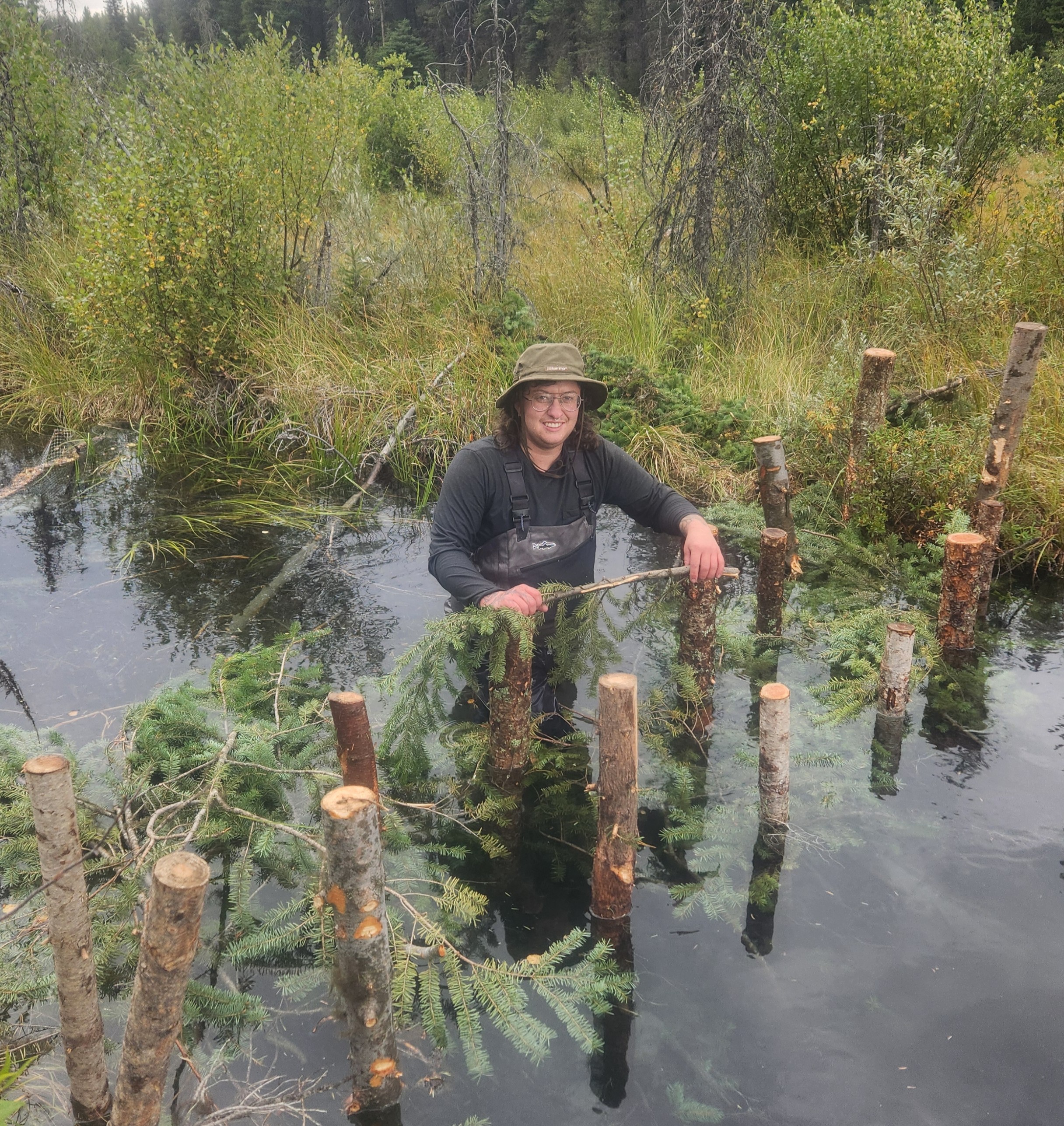
Smith describes the role as exciting and gratifying work. “Building up layer by layer, you see results right away as water starts to flood out.”
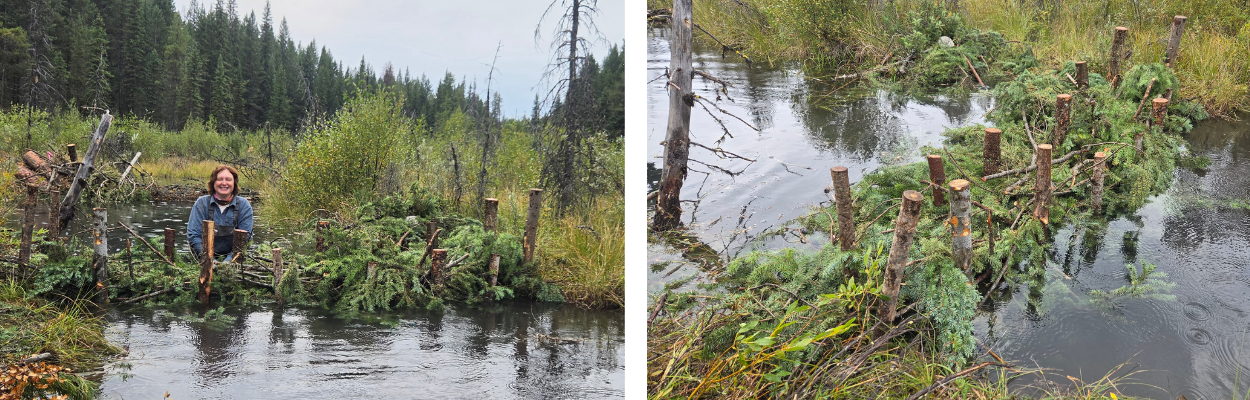
How to build a beaver dam analogue
The process is certainly hard work for both beavers and humans. The teams use all natural materials, like branches, wood posts from trees, and sediment from the surrounding site, just like a beaver would. They then transport all the materials to the BDA site and assemble the structure by hand, while bracing against the flowing water of a stream.
In all, 56 structures were built in 2026, restoring 27 hectares of wetland. But completing a BDA does not mean the work ends. Monitoring involves measuring changes following the installation: has the water level gone up, is the desired vegetation now growing there, and have wetland bird species moved in? While BDAs do closely fill the roles of a traditional beaver dam, the ultimate goal is that beavers will move back into these abandoned areas, taking advantage and ownership of the copycat constructions.
“What beavers do is more complex and long-lasting, as they are constantly fixing, adding, and maintaining their dams,” Smith explained. “This work gives you an appreciation for the enormous role they play in creating and maintaining wetlands and wetland processes that support other species, increase biodiversity and support watershed health.”
Our flat-tailed friends are in need of support, and so are the ecosystems that rely on them. With dryer summers in the forecast for B.C., sensitive wetland species and ecosystems are at risk. Leven, Smith, and the rest of the BDA field crew hope these structures will help fill the role of the beaver and encourage this long-time project manager of water supply operations to return to the habitats that so greatly rely on them.
Living Lakes Canada would like to thank the generous funders that have supported Living Lakes Canada’s contribution to this work: Habitat Conservation Trust Foundation and Wildlife Habitat Canada.
The Habitat Conservation Trust Foundation is a non-profit, charitable foundation that improves the conservation outcomes of BC’s fish and wildlife, and the habitats in which they live. The foundation funds conservation projects and educates and engages the public about BC’s natural assets.
Wildlife Habitat Canada is a non-profit, conservation organization that conserves habitat, primarily by investing the funds from the sale of the Canadian Wildlife Habitat Conservation Stamp and Print program, contributed by waterfowl hunters. Since 1985, the organization has provided over $64 million in grants to more than 1,600 habitat conservation projects across Canada.